


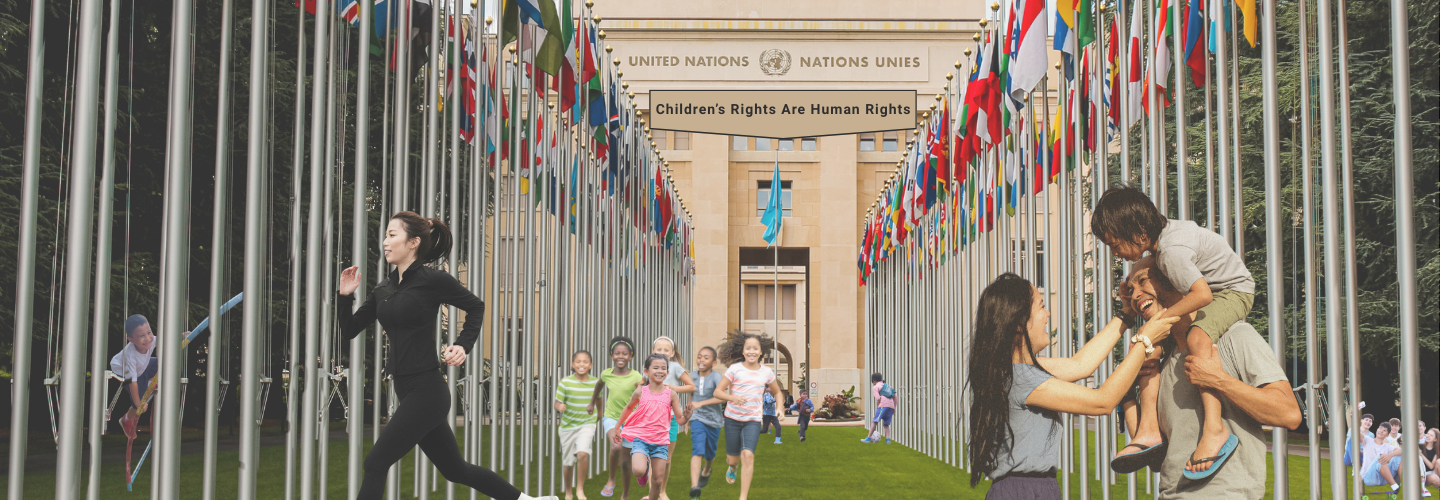



One of the many roles we fulfill at the Alliance for Self-Directed Education (ASDE) is connecting humans around the world to the causes important to youth rights, particularly regarding the choice of education and the right of every individual regardless of age to self-direct their life. It is important to us to understand the rights granted by various governments in order to support unschoolers and practitioners of Self-Directed Education in their right to an education without institutional school. Helping institutions and organizations understand and shape their policies governing children’s rights and educational choices is a big piece of our work.
Much of the documentation surrounding human rights of youth has been initiated and maintained by the United Nations (UN). While the UN is an organization with a tenuous connection to the US, the majority of global citizens – including Americans -view it as a positive influence overall to the majority of the globe. The origins of what we know today as the UN Convention on the Rights of the Child (UNCRC) are in a document known as the Declaration of the Rights of the Child, first approved by the League of Nations in 1924, with five points on the general health and welfare of children. These points have been expanded upon, detailed out, and shaped by the culture over the last 100 years into what is now the UN convention that includes 54 articles with detailed descriptions of many of the points.
The current version of the UNCRC, adopted in 1989, includes Article 28 which protects a child’s right to education. Here at ASDE, we believe there are critical points missed within the verbiage of the Right to Education. The idea of education must reflect the myriad pathways toward it that are available in this day and age. This intentional shift from “The Right to Education” to “The Right to Self-Determination” would recognize that as humans, we are natural learners and inherently engage in lifelong learning. No coercion required. This is more than a matter of semantics. It is a distinction to center human rights and acknowledge that education is far greater than simply what happens within the standardized school model of coercive and authoritarian instruction.
ASDE is committed to ally our organization with others working toward providing young people with relationships and spaces that protect and uplift their human rights. The Rights-Centric Education Network (RCEN) is “a community of practice advancing the protection and realisation of international Human Rights law (especially the UN Convention on the Rights of the Child) for, in and through education in all educational environments” (from rights-centric.education).
Last fall, Farida Shaheed, the UN Special Rapporteur on the Right to Education, asked for contributions and the RCEN encouraged its members to participate. This resulted in over a dozen organizations and individuals weighing in on “curriculum, pedagogy, and assessment” because, according to the UN, those three elements together “define the substantive content of the right to education” (from OHCHR | Call for inputs: Curriculum, pedagogy and assessment at the service of the right to education). Shaheed will include the information gathered from these contributions for her annual thematic report to be presented at the 62nd session of the Human Rights Council this year.
This is the letter that ASDE sent to the UN in response to their invitation for submissions:
To the UN Special Rapporteur on the Right to Education, delegates of Member States, and the Office of the High Commissioner for Human Rights (OHCHR):
I. Introduction: Redefining the Right to Education as the Right to Self-Determination
The Alliance for Self-Directed Education (ASDE) welcomes this opportunity to respond to the Call for Inputs of the UN Special Rapporteur. As we survey the global educational landscape in 2026, we find ourselves at a critical juncture. While the international community has spent decades focusing on “access to schooling,” we have often overlooked the fundamental nature of education itself.
On behalf of the ASDE Board and our global community, we submit that the current global crisis in youth mental health, the persistence of colonial paradigms in curricula, and the widening gap between standardized testing and the skills required for a complex future are all symptoms of a single root cause: the coercive nature and one-sized-fits all focus of modern schooling.
As established on our platform at self-directed.org, we define education not as something done to a student by a teacher, but as the sum of everything a person learns that supports them towards living a satisfying and meaningful life. When education is decoupled from the institutionalized coercion of the “standard” school model, it becomes a practice of human rights.
We urge the UN to recognize that Self-Directed Education (SDE) — education that derives from the self-chosen activities and life experiences of the learner — is the highest fulfillment of the UN Convention on the Rights of the Child (UNCRC). To fulfill the mandate of Article 29 (the development of the child’s personality, talents, and mental and physical abilities to their fullest potential), we must move beyond the “obedience training” of the 19th-century factory model and return to the biological and social foundations of how human beings actually learn.
II. The Biological Mandate: The Four Educative Drives and the UNCRC
The “standard” school model operates on the assumption that children must be coerced into learning via rewards and punishments. However, evolutionary biology and developmental psychology tell a different story. As detailed in our framework of the Four Educative Drives, humans are biologically “wired” for self-education.
1. Curiosity (The Right to Seek Information)
Within hours of birth, infants begin exploring their world. This drive is the engine of science and discovery. In conventional coercive schools, curiosity is often treated as a nuisance or a distraction from the “prescribed” curriculum. This is a direct violation of the spirit of UNCRC Article 13, which protects the child’s right to freedom of expression, including the freedom to seek, receive, and impart information of all kinds. SDE honors curiosity as the primary guide for a child’s educational journey.
2. Playfulness (The Right to Article 31)
UNCRC Article 31 recognizes the right of the child to rest, leisure, and play. However, in modern schooling, play is often relegated to a brief “recess” — a break from education. In SDE, we recognize that Play IS Education.
• Physical play builds bodies and grace.
• Risky play teaches the management of fear and development of courage.
• Social play teaches communication, compromise, and empathy.
• Imaginative play fosters the hypothetical thinking required for innovation.
When we suppress play in the name of “academic rigor,” we are not only violating a human right; we are sabotaging the child’s neurological development.
3. Sociability (The Right to Association)
Humans learn more by watching and listening to others than through any other means1. Conventional schools often restrict social interaction (labeling it “talking out of turn” or “cheating”). SDE leverages our natural sociability, allowing young people to hook themselves into the “single cognitive system” of human culture. This aligns with UNCRC Article 15, the right to freedom of association.
4. Planfulness (Self-Directed Executive Functioning)
The drive to think ahead and make plans develops as children grow. Research shows that children who have ample free time to play and explore develop higher levels of self-directed executive functioning than those in adult-structured environments2. By depriving children of the opportunity to make their own plans, coercive schooling stunts the very “planfulness” required for successful adulthood.
III. The Optimizing Conditions: A Framework for Educational Rights
For the UN to support a rights-centric education, it must move away from measuring “inputs” (hours in a desk) and toward ensuring “conditions.” ASDE identifies Six Optimizing Conditions that must be present for a child’s right to education to be fully realized3:
- Responsibility for Education: Society must trust the reality that education is the child’s responsibility. When adults take over this responsibility, they undermine the child’s efficacy and agency (violating UNCRC Article 12).
- Unlimited Time to Play and Explore: Children need space to get bored and overcome boredom, to follow fleeting interests, and to immerse themselves deeply in passions.
- Access to the Tools of the Culture: Whether a Macbook or a machete, children must have the right to play with the real tools used by the adults in their specific culture to achieve mastery.
- Free Age-Mixing: Age segregation is a modern, industrial invention. In SDE, younger children learn from older ones, and older children acquire leadership and nurturing skills through interaction with younger ones4.
- Stable, Supportive Community: Education must be embedded in a web of relationships based on mutual respect rather than hierarchy.
- Adult Allies (Not Judges): Adults in SDE serve as resources and supporters. They avoid the roles of judge and assessor, recognizing that constant evaluation induces anxiety and prevents authentic self-expression.
IV. Decolonization and Comprehensive Liberation
The “standard” model of schooling is not a neutral, scientific discovery; it is a historical product of 18th and 19th-century European paradigms designed for obedience training, class stratification, and cultural homogenization. For the Global South and marginalized communities in the Global North, “access to education” has too often meant “access to colonial indoctrination.” As ASDE emphasizes in our work on Collective Liberation5, coercive schooling was used as a tool of cultural genocide in residential schools and continues to be used to suppress indigenous ways of knowing6.
SDE is a vital tool for Decolonizing Education because:
- It allows for the restoration of indigenous and local knowledge systems that are often excluded from “government curricula.”
- It empowers BIPOC (Black, Indigenous, and People of Color) and marginalized youth to reclaim their agency in a system that has historically sought to manage and surveil them.
- It provides a sanctuary for neurodivergent children (those with ADHD, Autism, etc.) whose “body-minds” are often pathologized by the rigid requirements of the standard classroom. In SDE, divergence is not a “disability”; it is a unique path of learning.
The UN must recognize that “Quality Education” (SDG 4) cannot be achieved if the “quality” is defined by a singular, Western-centric standard that ignores the diverse lived experiences of the world’s children.
V. The Evidence: The Failure of “Standardization” vs. The Success of Self-Direction
The UN delegates must be made aware of the psychological damage currently being inflicted by coercive school systems. Our “Why Choose SDE?” data highlights a global emergency:
- Chronic Stress: Hair cortisol levels in children rise significantly upon entering elementary school, indicating stress levels that impair physical growth and health.
- Mental Health Crisis: In the U.S., emergency mental health visits for children and adolescents more than double during school months compared to summer breaks.
- Trauma: Between 50% and 60% of adults recall school-related experiences as being “psychologically traumatic.”
Conversely, Self-Directed Education works. Studies of graduates from SDE environments (such as the Sudbury Valley School and long-term unschoolers; see again self-directed.org/sde/why/) show that these individuals:
- Have no difficulty entering or succeeding in higher education.
- Are highly represented in creative arts, STEM careers, and entrepreneurship.
- Report higher levels of personal responsibility, initiative, and the ability to communicate with people across different status levels.
In an era of AI and rapid economic shift, the “standard” school’s focus on rote memorization and obedience is obsolete. The future belongs to those who can think critically, innovate, and self-direct their own learning — skills that are the natural byproduct of SDE.
VI. Policy Recommendations for Member States
To move toward an education system that respects the dignity and rights of the child, we propose the following actions for UN Member States:
- Legal Decoupling of “Education” and “Schooling”: Member states must revise legal frameworks to recognize that “education” is a broad human right that can be fulfilled outside of a physical school building or a government-mandated curriculum. SDE, including “unschooling” and democratic learning centers, must be legally recognized as a valid fulfillment of compulsory education requirements.
- Redirection of Public Funding (Educational Freedom Accounts): The right to education should not be tied to a child’s zip code or a specific institution. Funding should follow the child, allowing families to utilize public resources for SDE centers, community co-ops, mentors, and tools of the culture, rather than only for state-run coercive institutions.
- Prohibition of Coercive Practices: The UN should advocate for the ending of “high-stakes” standardized testing for young children, which fuels the “toxic” school environment. We must move toward “consensual feedback” models where evaluation is requested by the learner, not imposed by the state.
- Protection of the Right to Leisure (Article 31 Enforcement): Member states should limit the “encroachment” of schooling into home life (e.g., banning mandatory homework) to ensure children have the “unlimited time” required for self-education.
- Support for Community-Led SDE Centers: Governments should provide zoning and regulatory relief for grassroots SDE initiatives, recognizing them as essential community infrastructure for youth well-being and democratic participation.
VII. Conclusion: A Call for Educational Pluralism
Delegates, the “Right to Education” must no longer be a euphemism for the “Obligation to Suffer Schooling.”
If we truly believe in the principles of the UNCRC — if we truly believe that children are “rights-bearers” and not just “future citizens” in training — then we must grant them the freedom to own their own minds. Self-Directed Education is not a luxury for the few; it is a biological necessity and a fundamental right for all.
We call on the Special Rapporteur to champion a vision of Educational Pluralism, where the diversity of human learning is celebrated, where the biological drives of the child are honored, and where every young person is free to direct their own path toward a meaningful life.
The Alliance for Self-Directed Education stands ready to assist the UN in developing frameworks that protect this liberty for every child, everywhere.
Respectfully submitted,
The Alliance for Self-Directed Education (ASDE)
Citations
[1] Lancy, D. F., Bock, J., & Gaskins, S. (2010). Putting learning into context. In D. F. Lancy, J. Bock, & S. Gaskins (Eds.), The anthropology of learning in childhood, 3–10. AltaMira Press.
[2] Barker, J. et al (2014). Less-structured time in children’s lives predicts self-directed executive functioning. Frontiers in Psychology, 5, 1-16.
[3] Gray, P. (2016). Children’s natural ways of learning still work — even for the three Rs. In D. C. Geary & D. B. Berch (eds), Evolutionary perspectives on child development and education (pp 63-93). Springer.
[4] Gray, P., & Feldman, J. (2004). Playing in the Zone of Proximal Development: Qualities of Self-Directed Age Mixing Between Adolescents and Young Children at a Democratic School. American Journal of Education, 110, 108-145.
[5] ASDE Organizing Team. (2020, November 22). ASDE and Anti-Oppression Work. The Alliance for Self-Directed Education. https://www.self-directed.org/news/asde-and-anti-oppression-work/
[6] Alliance for Self-Directed Education. (2021, July 24). Unschooling As An Act of Resistance [Video]. YouTube. https://www.youtube.com/watch?v=5jRCzRBqMp4
–
Visit the RCEN website to learn more or find the additional submissions to the UN Special Rapporteur on the Right to Education.
Stay Informed About The Movement
If you enjoyed this article and feel called to give back to ASDE, here are ways you can support our work:
- Donate money
- Share our content with others! Click one of the buttons above to easily share on Twitter, Facebook, or email.
- Consider becoming a Contributor for Tipping Points
Tipping Points Magazine amplifies the diverse voices within the Self-Directed Education movement. The views expressed in our content belong solely to the author(s). The Alliance for Self-Directed Education disclaims responsibility for any interpretation or application of the information provided. Engage in dialogue by reaching out to the author(s) directly.